Tag Archives: what in the world podcast

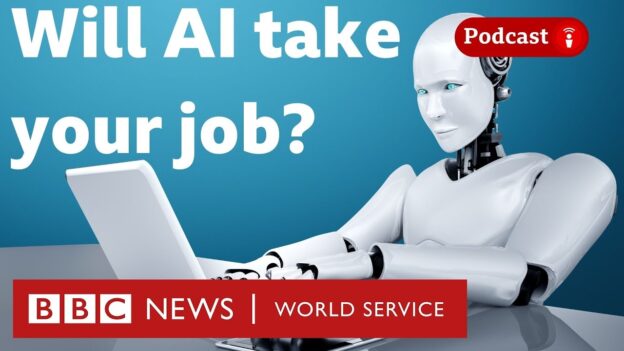
How AI is changing the job market – What in the World podcast, BBC World Service

Video

Video Description

Applying for jobs is tough.

Click here to subscribe to our channel ๐Ÿ‘‰๐Ÿฝ https://bbc.in/3VyyriM

First youโ€™ve got to find the adverts and openings, then thereโ€™s the mental energy and time required to put in an application – and thatโ€™s before you get to the nerve wracking interviews. But some of us are finding that process even harder than normal – putting in loads of applications and never hearing back. Some recent studies suggest that AI is a contributing factor, with younger workers being replaced by AI in some industries.

Companies like Amazon and Duolingo have said using AI is going to lead to a reduction in their workforce.

We hear some of your experiences in the current job market. BBC business reporter in New York, Nathalie Jimenez, explains which sectors are most affected by the adoption of generative AI – and what you can do to try to adapt. Plus Varun Mayya, a YouTuber and the founder of generative AI company Aeos, tells us what the situation is like in India – and how AI is changing how his company operates.

00:00 Coming up
00:19 Intro
01:15 Jobs AI is taking over
02:40 Why itโ€™s harder to find a job
03:35 People impacted by AI while job hunting
06:23 Big companies and AI
08:10 AI and job interviews
09:40 AIโ€™s impact in India
12:20 Advice for the future

Watch more episodes from What in the World here ๐Ÿ‘‰๐Ÿฝ https://www.youtube.com/playlist?list=PLz_B0PFGIn4eMOlGZclzdcHmv7s8BFQE6

Instagram: @bbcwhatintheworld
Email: whatintheworld@bbc.co.uk
WhatsApp: +44 330 12 33 22 6
Presenter: Hannah Gelbart
Producers: Chelsea Coates, Benita Barden and Julia Ross-Roy
Video Journalist: Jem Westgate
Editor: Verity Wilde

—————-
This is the official BBC World Service YouTube channel.
If you like what we do, you can also find us here:
Instagram ๐Ÿ‘‰๐Ÿฝ https://www.instagram.com/bbcworldservice
Twitter ๐Ÿ‘‰๐Ÿฝ https://twitter.com/bbcworldservice
Facebook ๐Ÿ‘‰๐Ÿฝ https://facebook.com/bbcworldservice
BBC World Service website ๐Ÿ‘‰๐Ÿฝ https://www.bbc.co.uk/worldserviceradio

Thanks for watching and subscribing!
#BBCWorldService #WorldService #aijobs #artificialintelligence #ai

Are women better leaders than men? – What in the World podcast, BBC World Service

Video

Video Description

Is there any evidence that a female leader can change a country for the better? Do women make better politicians. Or is it all based on stereotypes?

Click here to subscribe to our channel ๐Ÿ‘‰๐Ÿฝ https://bbc.in/3VyyriM

Women make up less than 7% of world leaders, and in 2024, the number of women in parliaments across the world fell. However, Mexico, Namibia and North Macedonia all elected their first female presidents, and as more women take up the top jobs, thereโ€™s a debate about whether they do things differently to men.

Laura Garcia from BBC Mundo breaks down some common misconceptions about women in power with a game of True or False.

And Professor Rosie Campbell from the Global Institute for Women's Leadership, at Kingโ€™s College, London, tells us why itโ€™s so hard to draw conclusions about the effects of female lawmakers.

00:00 Introduction
00:43 True or False with BBC Mundoโ€™s Laura Garcia
01:36 The first women to be elected head of state was in Europe: True or False?
02:17 What proportion of world leaders are female?
02:41 Mexico elected its first female President in 2024
03:29 Claudia Sheinbaumโ€™s style of leadership
04:40 True or False: Women leaders only succeed by acting like men
05:50 Why is it so difficult to assess โ€œmaleโ€ and โ€œfemaleโ€ leadership styles?
06:48 Do women in politics bring in policies that benefit women?
08:58 True or False: there's less corruption when women are in charge
10:20 Why do some people want to see more women in politics and leadership positions?
11:54 What is the evidence that women leaders do things differently?
12:56 Everyone has a different way of leading, whether they are men or women.
14:00 Ending

Watch more episodes of What in the World here ๐Ÿ‘‰๐Ÿฝ https://www.youtube.com/playlist?list=PLz_B0PFGIn4eMOlGZclzdcHmv7s8BFQE6

And you can listen to more episodes from What in the World here ๐Ÿ‘‰๐Ÿฝ https://www.youtube.com/playlist?list=PLz_B0PFGIn4dvYFTA_2eIltC1UeiSsJc8

Instagram: @bbcwhatintheworld
Email: whatintheworld@bbc.co.uk
WhatsApp: +44 0330 12 33 22 6
Presenter: Hannah Gelbart
Producers: Julia Ross-Roy and Benita Barden
Video Journalist: Baldeep Chahal
Editor: Verity Wilde

—————-
This is the official BBC World Service YouTube channel.
If you like what we do, you can also find us here:
Instagram ๐Ÿ‘‰๐Ÿฝ https://www.instagram.com/bbcworldservice
Twitter ๐Ÿ‘‰๐Ÿฝ https://twitter.com/bbcworldservice
Facebook ๐Ÿ‘‰๐Ÿฝ https://facebook.com/bbcworldservice
BBC World Service website ๐Ÿ‘‰๐Ÿฝ https://www.bbc.co.uk/worldserviceradio

Thanks for watching and subscribing!
#BBCWorldService #leadership #womeninpolitics

Bans on social media and phones: what’s the evidence? – What in the World podcast, BBC World Service

Video

Video Description

We explore different approaches to social media and phone bans around the world.

Click here to subscribe to our channel ๐Ÿ‘‰๐Ÿฝ https://bbc.in/3VyyriM

Phones have become an essential part of most peopleโ€™s everyday lives, and debates about them in schools – as well as teenagersโ€™ access to social media – are internationally hot topics.

BBC journalist Hayley Clarke joins us in the studio to talk through different approaches to social media and phone bans in schools around the world. We also hear from students in France and the US about how they would feel about potential bans.

Hannah Ritchie, a BBC journalist, chats to us from Australia, where the government says it will introduce "world-leading" legislation to ban children under 16 from social media.

Plus we hear from two professors on opposing sides of the debate, and ask whether the scientific evidence behind the bans is robust.

00:00 Introduction
00:50 Screen time challenge
03:15 Average screen time statistics
04:16 Which countries are banning phones and social media?
05:45 Australia banning under-16s from social media
07:15 Evidence for smartphones affecting mental health
07:50 Modern childhood transformation theory
09:42 Other studies into impacts of smartphones
10:55 Why some experts think bans wonโ€™t work
12:38 Cause and effect
13:15 US student shares what they think
14:30 French students share what they think
17:05 What do companies say?
17:58 Tips to reduce screen time

Watch more episodes of What in the World here ๐Ÿ‘‰๐Ÿฝ https://www.youtube.com/playlist?list=PLz_B0PFGIn4eMOlGZclzdcHmv7s8BFQE6

And you can listen to more episodes from What in the World here ๐Ÿ‘‰๐Ÿฝ https://www.youtube.com/playlist?list=PLz_B0PFGIn4dvYFTA_2eIltC1UeiSsJc8

Instagram: @bbcwhatintheworld
WhatsApp: +44 0330 12 33 22 6
Email: whatintheworld@bbc.co.uk
Presenter: Hannah Gelbart
Producers: Julia Ross-Roy, Hayley Clarke and Emilia Jansson
Video journalist: Adam Chowdhury
Editor: Verity Wilde

—————-
This is the official BBC World Service YouTube channel.
If you like what we do, you can also find us here:
Instagram ๐Ÿ‘‰๐Ÿฝ https://www.instagram.com/bbcworldservice
Twitter ๐Ÿ‘‰๐Ÿฝ https://twitter.com/bbcworldservice
Facebook ๐Ÿ‘‰๐Ÿฝ https://facebook.com/bbcworldservice
BBC World Service website ๐Ÿ‘‰๐Ÿฝ https://www.bbc.co.uk/worldserviceradio

Thanks for watching and subscribing!
#BBCWorldService #WorldService #smartphones #phoneban #socialmedia