Video
Video Description
Daniel Davis Deep Dive Merch: Etsy store
https://www.etsy.com/shop/DanielDavisDeepDive?ref=seller-platform-mcnav
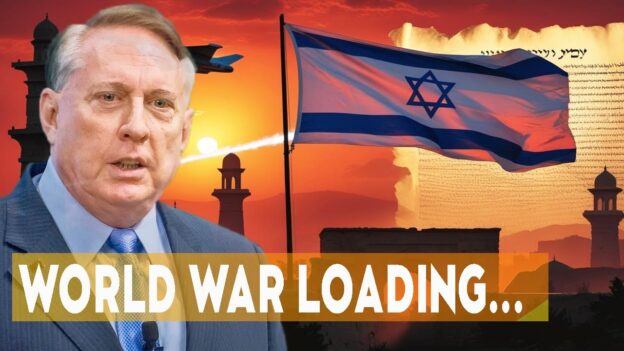
Col Doug Macgregor argues that some political voices claim Israel and Jews worldwide will never be safe unless Iran is eliminated. He warns that this logic could lead to an endless series of wars—first Iran, then possibly Turkey, Pakistan, or other Muslim-majority countries.
He says this approach resembles the idea of pre-emptive punishment, comparing it to the logic used by Joseph Stalin, who justified killing people before they could threaten the state. According to the speaker, attacking countries because they might be hostile rather than because they directly attacked the U.S. is dangerous and irrational.
2. Critique of U.S. Leadership
The speaker argues the United States needs leadership that better understands global realities rather than following propaganda or being overly influenced by allies. He suggests U.S. policy has become unbalanced and driven by fear rather than strategic thinking.
He specifically criticizes statements from Donald Trump, saying rhetoric from the White House cannot change the strategic consequences of the war.
3. Damage to U.S. Credibility in the Middle East
One of the main arguments is that the war with Iran is damaging America’s reputation as a stabilizing power in the Middle East.
Countries that traditionally rely on U.S. security guarantees—such as Saudi Arabia, Qatar, Bahrain, Kuwait, and the United Arab Emirates—have been attacked despite being U.S. partners.
Key point:
These attacks demonstrate that being aligned with the U.S. does not protect them from retaliation.
U.S. air defense systems have struggled to defend these countries effectively.
The speaker predicts that after the war ends, regional leaders may reconsider their relationship with Washington, possibly reducing or ending U.S. military presence in the region.
4. Potential Loss of U.S. Influence Globally
The speaker believes the consequences will extend beyond the Middle East.
Countries hosting U.S. troops might question whether American forces actually improve their security. For example:
South Korea might question why U.S. troops remain if they cannot protect allies elsewhere.
Japan might ask similar questions.
He argues that many countries in Northeast Asia—Japan, South Korea, and China—are primarily interested in trade and stability, not war. If U.S. forces appear to bring conflict rather than security, governments may start viewing them as liabilities instead of assets.
5. Historical Comparison to 1919
The speaker contrasts today’s situation with the past.
After Paris Peace Conference, a delegation from Syria reportedly asked the United States to oversee their protectorate because they trusted Americans to help build a democratic state.
The speaker says this illustrates how respected the U.S. once was globally.
His point:
Today it is almost unimaginable that a country in the developing world would ask the U.S. to help build its political system.
6. Economic Consequences of the War
The discussion then shifts to economic impacts, especially oil.
The conflict threatens shipping through the Strait of Hormuz, one of the world’s most important oil transit routes.
Oil dependency from the Persian Gulf:
Japan – about 72% of oil
South Korea – about 65%
India – about 50%
China – about 50%
Europe – about 18%
United States – about 2%
The speaker argues that the war hurts the U.S.’s own partners more than it hurts America.
7. Rising Oil Prices and Market Instability
Signs of economic impact already appearing:
Oil prices have risen about 11% since the war began.
Stock markets have dropped sharply.
Tanker insurance companies may refuse to cover ships passing through the Strait of Hormuz.
If oil shipments decline, the speaker predicts prices could exceed $100 per barrel.
8. Strategic Advantage for Russia
The speaker argues the war could benefit Russia.
Because many countries need alternative energy supplies, they may turn to Russian oil and gas.
Countries already moving in that direction include:
China
India
Japan
South Korea
This could increase Russia’s wealth and geopolitical influence despite Western efforts to weaken it.
9. Risk of Escalation Toward World War
Finally, the speaker warns that continued escalation—such as stopping Chinese oil tankers—could trigger direct confrontation between major powers.
He describes the current situation as a “low-intensity third world war.”
If the conflict continues to expand, he believes it could turn into a full-scale global war.
✅ Overall argument:
The speaker believes the war with Iran is strategically misguided. He argues it will weaken U.S. alliances, damage global credibility, disrupt the world economy, strengthen rivals like Russia, and risk escalating into a much larger international conflict.